- (877) 841-1902
- Online Chat (24/7) Business Operation: (3pm-12am)

We are no longer located on Edgewater Drive. All orders are placed and shipped from Conyers, Georgia. We do not charge for shipping. Dismiss
Our 3D Printers are capable of printing with PLA, PETG, ABS, TPU (flexible), Nylon, Polypropylene, and many more.
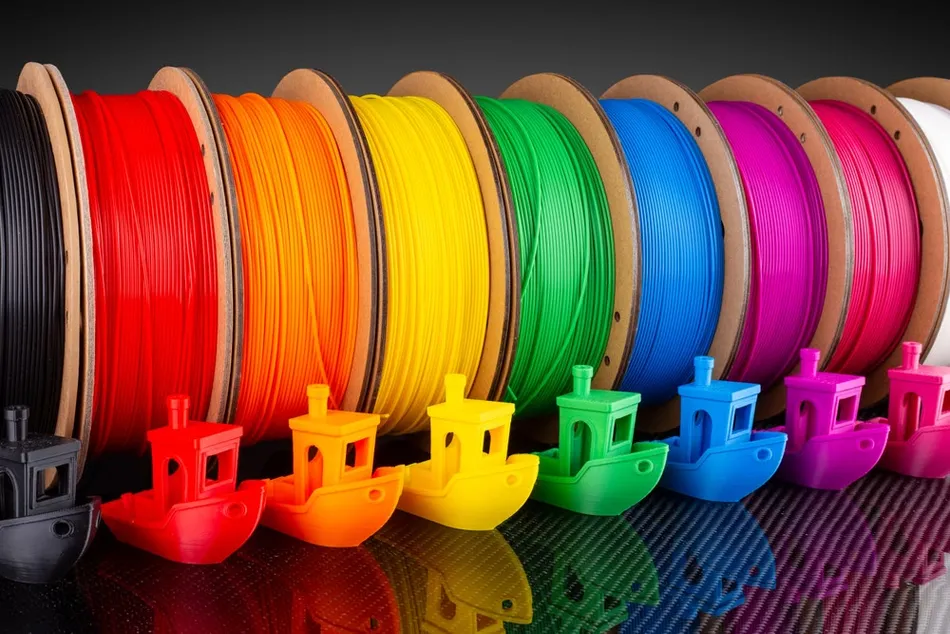
PLA filament in 3D printing stands for Polylactic Acid, a thermoplastic polymer derived from renewable resources like cornstarch or sugarcane. It’s a popular choice for beginners due to its ease of printing and biodegradability. PLA is known for being user-friendly, requiring lower printing temperatures and not needing a heated bed.
ABS (Acrylonitrile Butadiene Styrene) filament is a popular thermoplastic used in 3D printing known for its strength, durability, and heat resistance. It’s a good choice for creating functional parts, prototypes, and items needing to withstand higher temperatures and impact.
PETG filament is a thermoplastic polymer filament used in 3D printing, known for its combination of strength, flexibility, and ease of printing. It’s a glycol-modified version of PET (Polyethylene Terephthalate), offering improved durability and impact resistance compared to standard PET.
ASA filament is a thermoplastic used in 3D printing, known for its strength, weather resistance, and UV resistance. It’s a good alternative to ABS filament for outdoor applications due to its superior UV resistance and ability to withstand harsh environmental conditions.
Nylon filament for 3D printing is a tough, durable, and flexible material, ideal for functional parts and prototypes requiring high strength and abrasion resistance. It’s known for its wear resistance, but also for its tendency to absorb moisture, which can affect print quality.
Carbon fiber filament for 3D printing combines a base material (like PLA, ABS, or Nylon) with short strands of carbon fibers. This infusion significantly enhances the filament’s properties, resulting in stronger, stiffer, and more dimensionally stable 3D printed parts. It’s a popular choice for applications requiring high strength, stiffness, and lightweight properties.
TPU (Thermoplastic Polyurethane) filament is a flexible and durable material used in 3D printing. It’s known for its rubber-like properties, making it ideal for creating parts that need to bend, stretch, or absorb impacts. TPU filament offers a good balance of flexibility, strength, and ease of printing compared to other flexible filaments like TPE.
TPE (Thermoplastic Elastomer) filament is a flexible 3D printing material that combines the properties of both plastic and rubber. It’s known for its high elasticity, flexibility, and ability to be stretched and bent repeatedly without breaking. TPE is often used for applications requiring a rubbery feel, good layer adhesion, and resistance to wear and tear.
TPC (Thermoplastic Copolyester) is a flexible 3D printing filament known for its rubber-like properties, good impact resistance, and ability to withstand high temperatures and chemicals. It’s a type of Thermoplastic Elastomer (TPE), offering a balance of flexibility and durability, making it suitable for a variety of applications, especially those requiring flexibility and resistance to harsh environments.